Telice promotes fire safety modernization in the Madrid-Valladolid Corridor tunnels
At TELICE, we’ve been bringing our motto—“technology in the field”—to life since 1973. Now we’re taking it a step further: we’ve completed our first R&D project in artificial intelligence. We developed it with co-funding from the European Regional Development Fund (ERDF) and the Regional Government of Castile and León, through the Institute for Business Competitiveness of Castile and León (ICECYL). The result is SALUS, a virtual assistant that provides health and safety information to the teams working on our railway construction sites.
The challenge: 700 pages you need to have on hand
Every construction project has its own Health and Safety Plan. It is an essential document, but also a lengthy one: it typically runs around 700 pages, with thousands of paragraphs, tables, and images. Everyone working on the project agrees to familiarize themselves with the risks and preventive measures outlined in the plan. However, in the middle of a workday, out on the tracks, it’s not easy to find the specific answer you need in a document like that.
SALUS was created to solve this problem: to enable any worker to ask questions in natural language and quickly find out what their work plan says, right from their cell phone.
What is SALUS
SALUS is a mobile app with two main features:
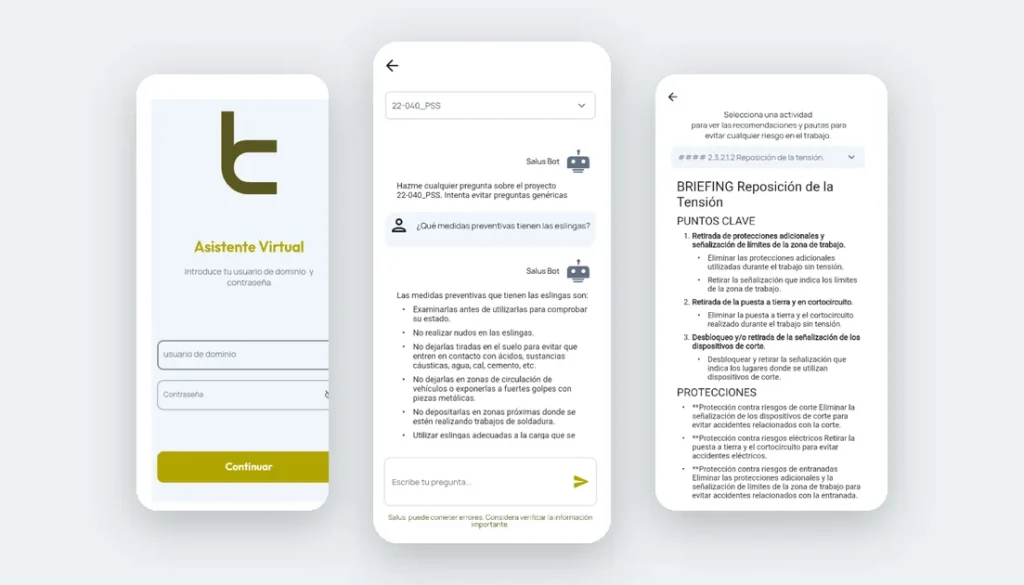
- Chat: The worker selects their job site and asks, for example, “What safety measures are in place for slings?” SALUS identifies the sections of the plan that answer that question and presents them clearly.
- Briefing: When the worker selects the activity they are about to perform, they receive a summary of the key points: risks, necessary protective measures, and preventive measures.
Access is granted using TELICE corporate credentials. Additionally, the entire system runs on the company’s own infrastructure: documents and queries never leave the company.
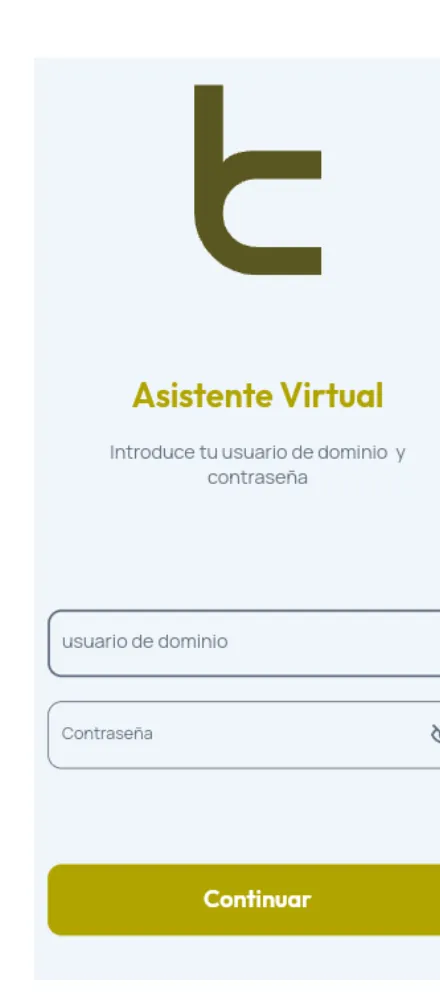
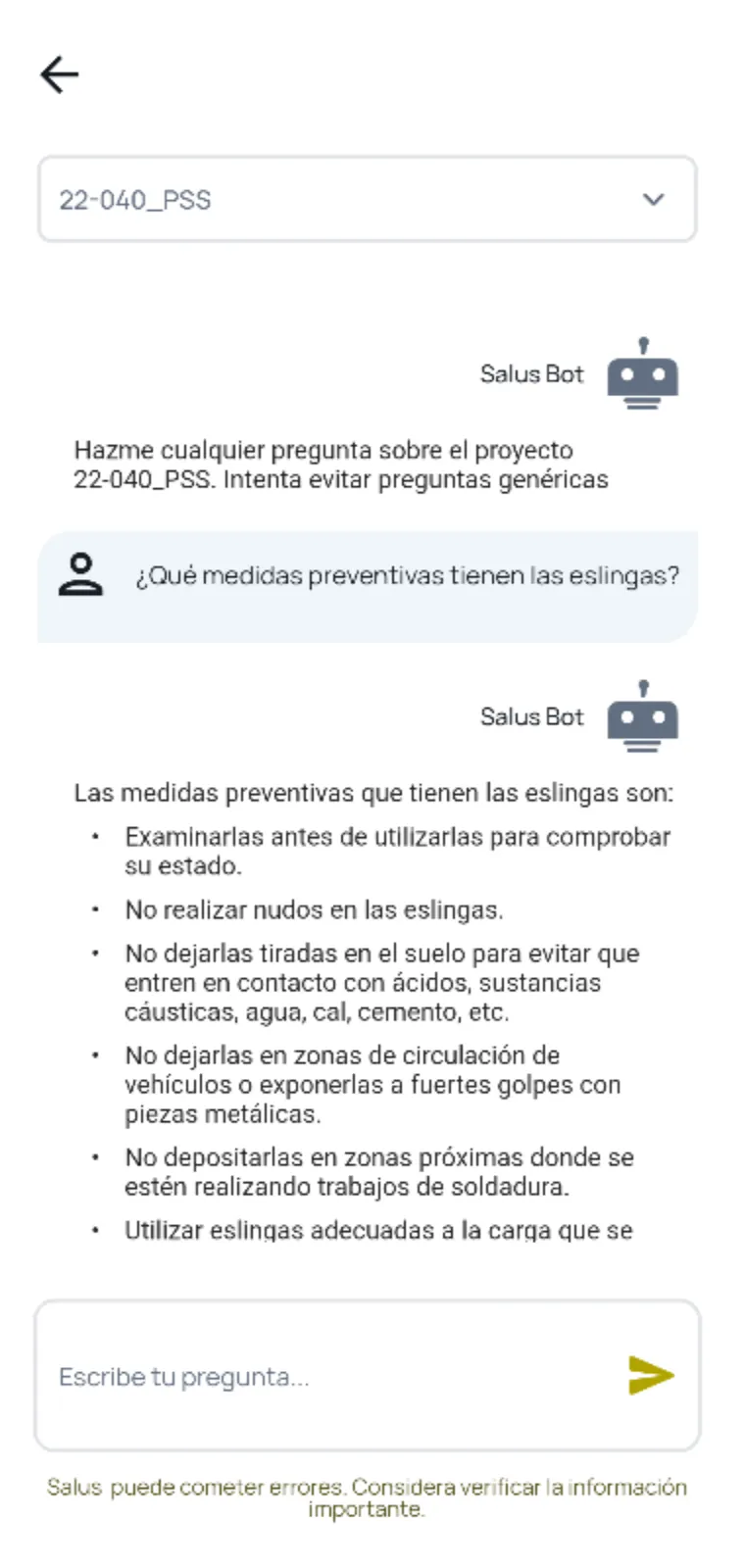
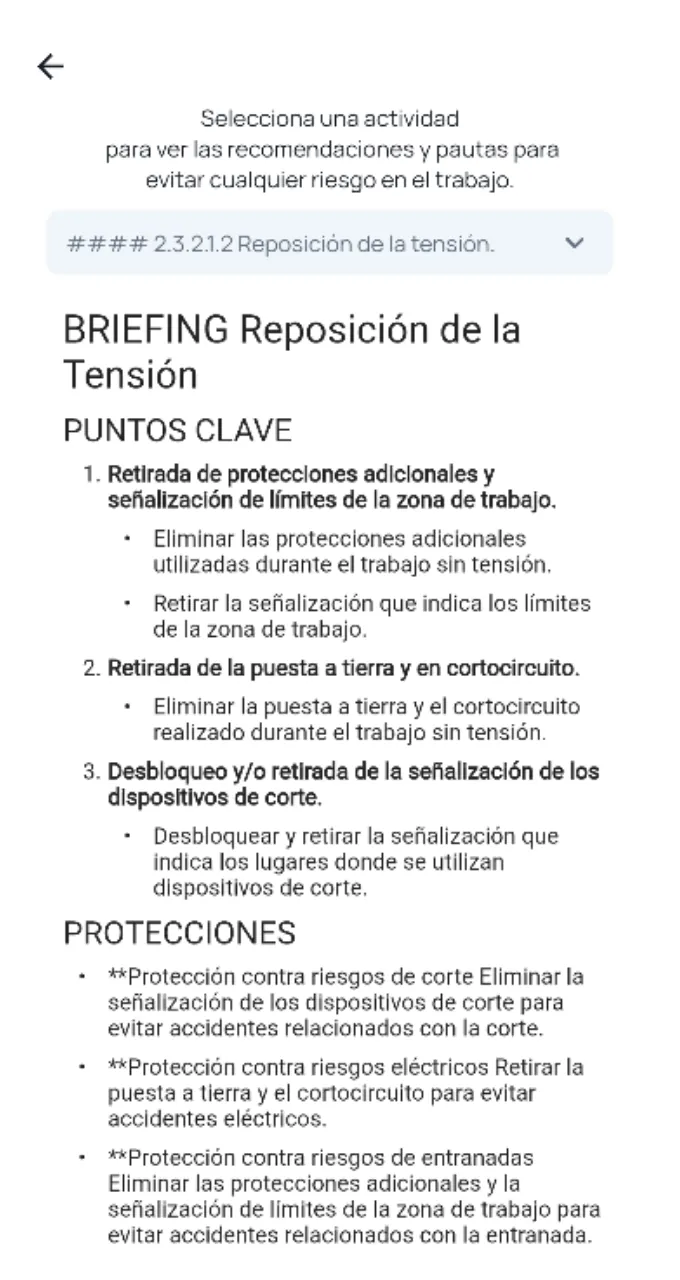
Corporate access, chat about the construction plan, and a briefing on an activity in the SALUS app.
SALUS does not replace safety procedures or safety technicians. It is simply another tool to help you consult and apply these procedures in your day-to-day work.
What We’ve Learned
In addition to a prototype, the project has taught us some lessons that go beyond technology.
1. The hard part is finding the right piece
An assistant like this works like someone who has to answer a question by consulting a 700-page manual but can only read a few paragraphs. It all depends on which paragraphs are presented to it. In a safety plan, a term like “sling” appears in more than a hundred paragraphs spread across dozens of sections. Choosing the right excerpts for each question is the real challenge. No AI model, no matter how powerful, can compensate for poor selection.
2. The quality of AI depends on the quality of the data
We soon realized that many errors didn’t stem from the artificial intelligence, but from the documents themselves. We found the same section written in several different ways, lists cut off by a page break, titles without the proper formatting, and tables saved as images. That’s why we refocused the project toward a data-centric AI approach, which emphasizes the data: cleaning, organizing, and structuring each plan before the AI works on it. This was the most significant effort of the project, and it also yielded the greatest improvement in results.
3. In critical documents, the original text takes precedence
In risk prevention, a response that sounds good but changes a single nuance can be dangerous. That is why we have concluded that, in critical documents, the most valuable approach is to locate and display the exact passage from the plan, along with its reference. AI helps find and present the information, but the true source remains the document itself.
Results
- Improvement validated by safety technicians. In a blind test, the technicians compared the responses from the first version with those from the final version without knowing which was which. The percentage of correct answers rose from 54% to 78%.
- Fewer made-up answers: when the plan does not contain the information, SALUS indicates this instead of improvising an answer.
- Ready for real-world use: It supports 20 simultaneous users without any significant degradation in service.
- A prototype deployed in pre-production and integrated with the corporate authentication system, capable of processing data from tables and images.
Beyond SALUS
As an innovative SME, SALUS offers us much more than just an app. Since this is our first artificial intelligence project, it provides us with:
- In-house expertise: We know how to build, evaluate, and deploy an AI assistant, and we understand its real challenges.
- Technological autonomy: a technical foundation built on our own infrastructure, with control over data and models.
- Reusable tools for new developments, such as the automatic extraction of data from scanned documents, invoices, or delivery notes, or the review of the format of safety plans.
- Open-source contribution: During the project, we identified a bug in Docling, an open-source document conversion tool developed by IBM Research. We reported it along with a proposed solution, which the project team incorporated into the tool.
Next Steps
Building on what we’ve learned at SALUS, we continue to work on several fronts:
- Offer document data extraction as a service available to other enterprise applications.
- Use AI to help draft documents, particularly risk prevention plans that are created in a well-structured format from the start.
- Implement a document management system and connect SALUS to all our documents.
- Reserve generative AI for uses where it adds value without compromising information, distinguishing between critical and non-critical documents.
We continue to shape the future of rail with innovative solutions. TELICE: Straight to the Future.
Co-funded R&D&I project
DESIGN AND DEVELOPMENT OF A PROTOTYPE VIRTUAL ASSISTANT BASED ON ARTIFICIAL INTELLIGENCE TO HELP IMPROVE OCCUPATIONAL HAZARD PREVENTION
Case No.: 04/23/LE/0007
This project is funded by the European Union’s European Regional Development Fund (ERDF) and the Regional Government of Castile and León through the Institute for Business Competitiveness of Castile and León (ICECYL), with the aim of promoting research, technological development, and innovation.
The project implementation period, that is, the period established for the overall fulfillment of all the conditions set forth in the Resolution, as well as the completion of the activities covered by the grant, begins on the date the grant application is submitted (June 17, 2024) and ends on December 31, 2025.